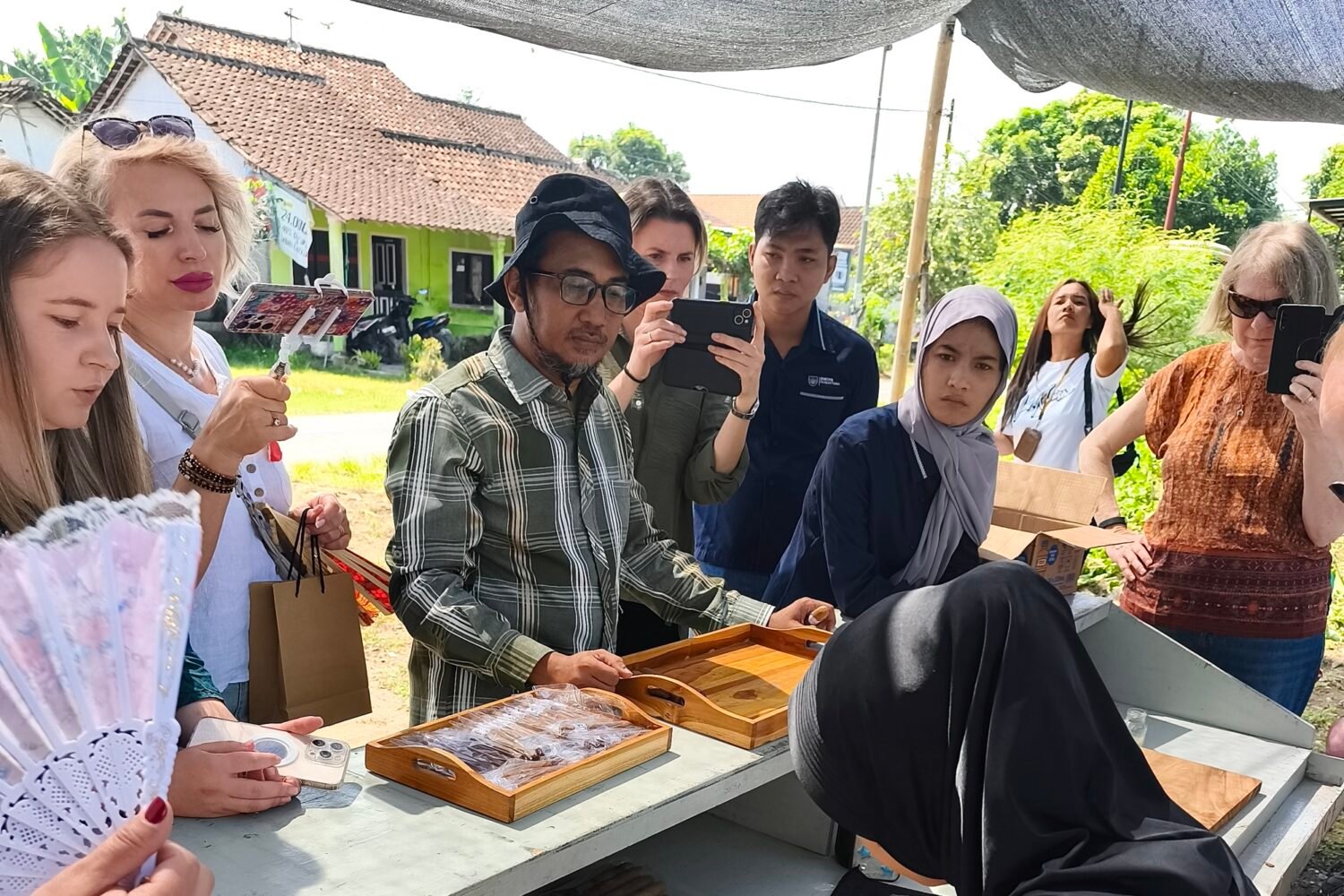
This morning, We welcomed a group of travelers from Romania to the cigar factory. They arrived around 9:30 in the morning as part of a long overland journey across Indonesia. Their route had already taken them through Jakarta, Yogyakarta, Surabaya, and Bromo. After visiting Jember and Kalibaru, they would continue to Banyuwangi before finally ending their trip in Bali.
There were 17 people in the group, accompanied by a tour leader who translated my English explanations into Romanian for the participants.
As they gathered in front of the factory, I began with my usual introduction.
“Hello ladies and gentlemen, welcome to the cigar factory. Now I’m going to tell a story about the process of making cigars.”
Introducing the Three Types of Tobacco Leaves
Before entering the production area, I invited them to stand in front of several tobacco leaves that had been prepared for the description. I always like to begin the tour from the tobacco because each part of the leave has soul of every cigar.
“In front of us,” I said, “there are three different types of tobacco leaf.”
I picked up the first leaf carefully.
“This one is called filler. The filler is responsible for aroma, strength and taste.”
Then I showed them the second leaf.
“This is binder. Its purpose is to hold the filler together.”
Finally, I lifted the smoothest and most beautiful leaf.
“And this one is wrapper. The wrapper becomes the outer layer of the cigar. It influences appearance, texture, and even part of the flavor experience.”
while I describe each of the leaves, which part from the plantation taken, the participants observed the leaves closely. Some touched the texture of the wrapper leaf with curiosity, while others took photos during the explanation.
When Nobody Had Smoked a Cigar Before
Before continuing, I asked them a simple question.
“Does anyone here smoke cigars before?”
Nobody raised a hand. Apparently, none of them had ever smoked a cigar in their lives.
That answer actually made the tour more interesting for us because I realized I was introducing something completely new to them.
I told them not to worry because the explanation would be lively and easy to follow. The atmosphere immediately became more relaxed.
I continued by showing them the anatomy of a cigar and the handmade production process step by step.
Explaining the Handmade Cigar Process
After the introduction, we entered the factory area where I showed them how tobacco leaves are sorted according to quality and texture before being prepared for rolling. I explained how the filler leaves are treated and blended carefully to create balance in aroma and character; body and strength.
Then I demonstrated the rolling process.
The participants watched attentively as I explained how the filler is placed before being rolled by binder and shaped by hand. Some of them seemed surprised to discover that there is no machinery in the process of making cigars but those require skilled hands, precision and persistance.
I continued the explanation by introducing the molding process. I showed them the wooden molds used to maintain the cigar’s shape and density.
After that, I pointed to the refrigerator which function to maintain the excess cigars humidity and keep them for few days before go to the aging room, where cigars are stored for months so the flavors can mature naturally and blended as intended.
Romanian and Tobacco Stories
At every stage, the tour leader translated my explanation into Romanian. The interaction between English and Romanian created an interesting rhythm during the tour.
While waiting for the translation, I could observe the participants’ reactions more carefully. Some nodded with curiosity, while others quietly recorded videos of the process.
What I enjoyed most was seeing how genuinely interested they became, even though they were not cigar smokers. They asked questions about tobacco leaves, where the tobacco came from, and how to store cigars properly.
Surprisingly, several participants bought cigars as souvenirs along our quick tour. Some said they wanted to bring them home as gifts, while others simply wanted to remember the experience of visiting a traditional cigar factory in Indonesia.
Demonstrating How to Enjoy a Cigar
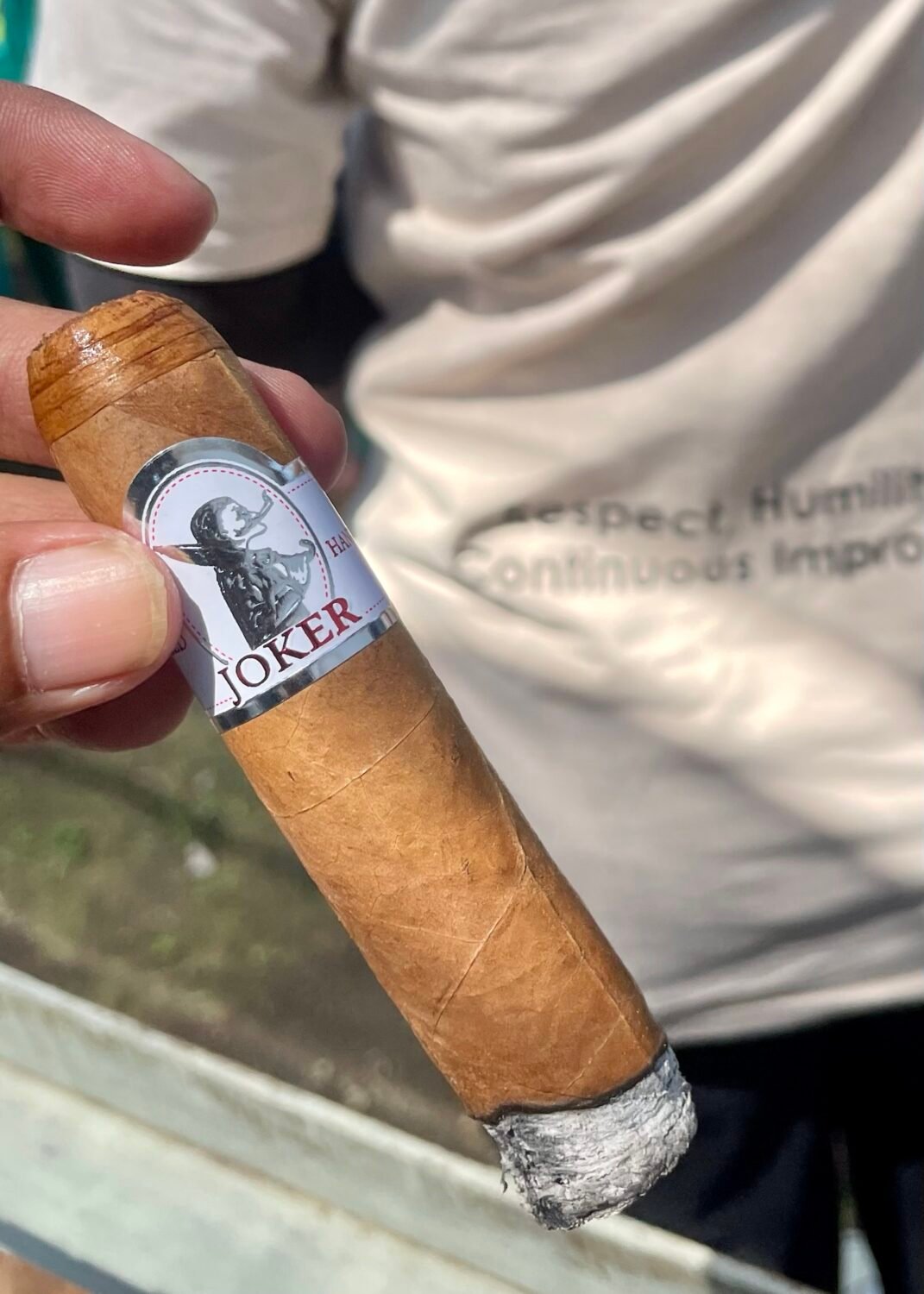
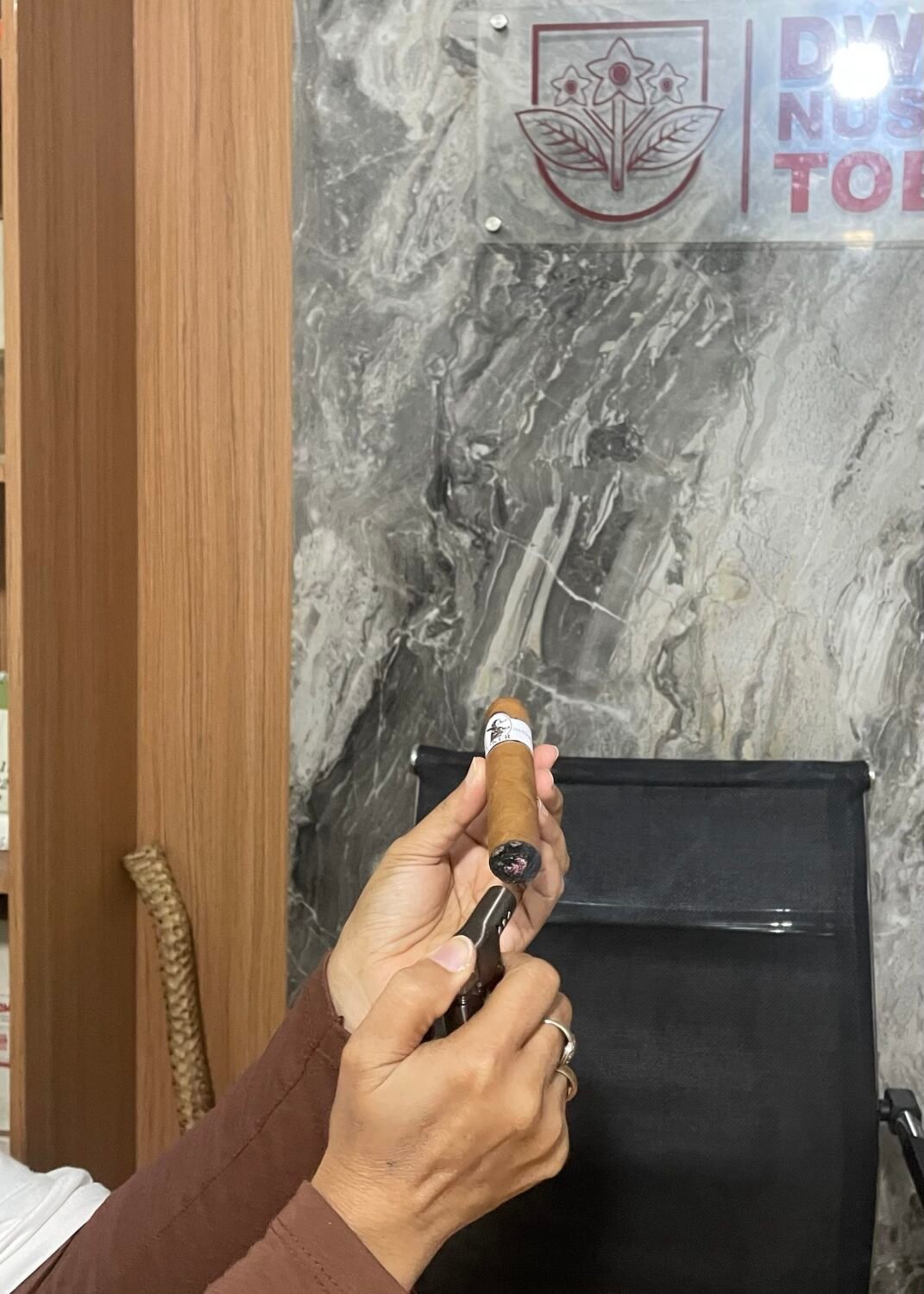
At the end of the tour, I demonstrated how to properly hold, light, and smoke a cigar.
I explained that cigars are not inhaled like cigarettes but enjoyed slowly to appreciate the flavor and aroma.
None of them decided to smoke, but they listened carefully and laughed during this session.
A Cultural Connection Through Cigars
Before the group departed, I thanked the tour leader for helping bridge the language difference throughout the tour.
The participants waved goodbye warmly before boarding their bus and continuing their journey toward Banyuwangi and Bali.
After they left, I stood quietly for a moment and reflected on the experience. What stayed in my mind was not only the factory explanation itself, but the feeling that cigars had become a cultural bridge between people from very different backgrounds.
Even for visitors who had never smoked before, the story behind tobacco, craftsmanship, and tradition was enough to create curiosity and connection. For me, that is always the most meaningful part of guiding visitors through the cigar factory.
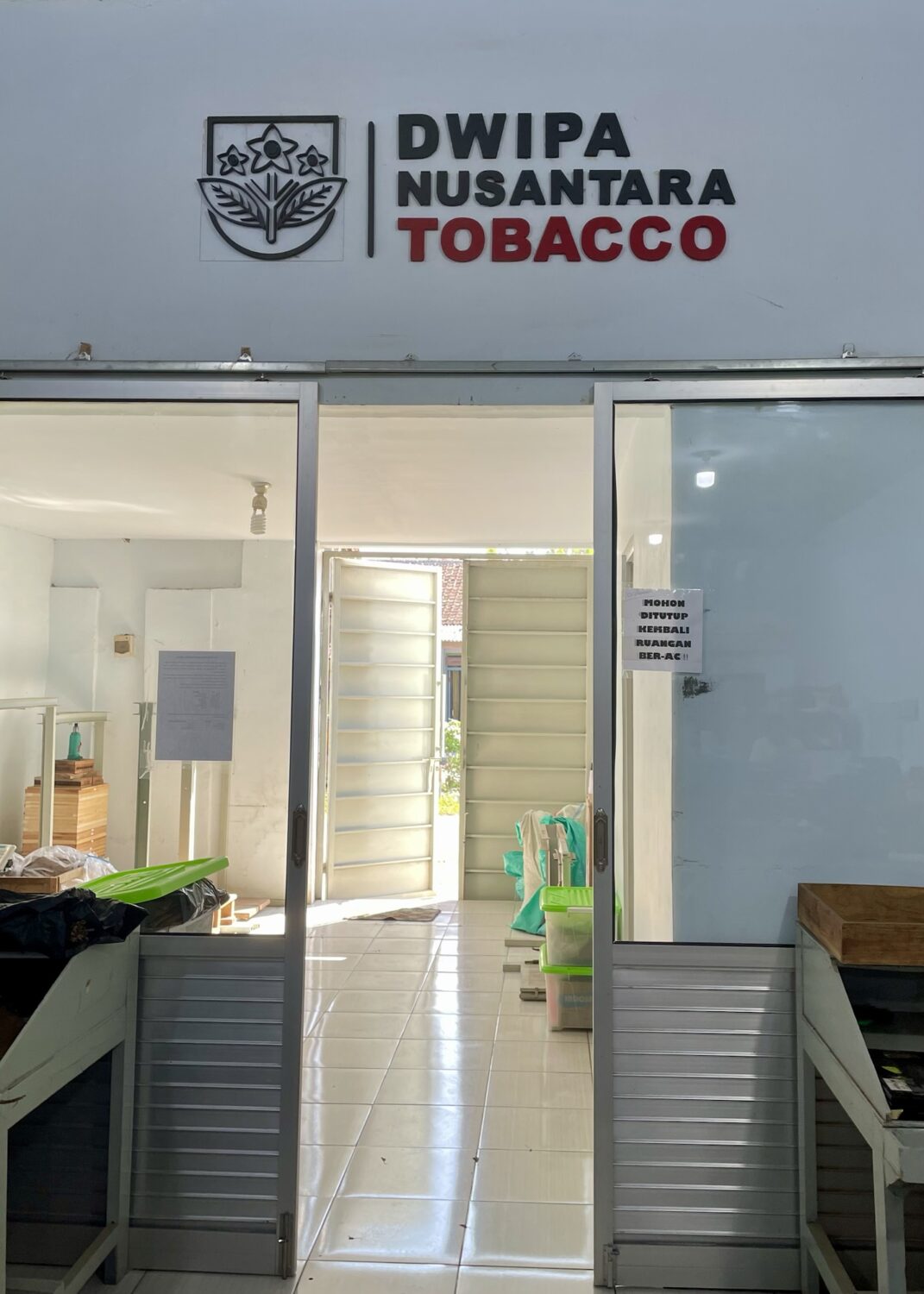
Location: Dwipa Nusantara Tobacco